Enter the size of the patio and the size of your pavers. The calculator counts the pavers with extra for cuts and works out the compacted gravel base and the bedding sand underneath.
How the paver calculator works
- Pavers = area ÷ ((paver length + 1/8 in) × (paver width + 1/8 in)), plus extra for cuts, rounded up.
- Gravel base = area × base depth, plus 10% for compaction. Weight uses 2,800 lb per cubic yard.
- Bedding sand = area × sand depth. In US units it is also shown as 0.5 cu ft bags.
Worked example
A 10 × 12 ft patio is 120 sq ft. With 4 × 8 in pavers and a 1/8 in joint, 515.6 pavers cover it; with 10% extra that is 568 pavers. A 4 in base with 10% compaction is 44 cu ft, or 1.63 cubic yards and about 2.3 tons. A 1 in sand bed is 10 cu ft, or 20 bags.
Pavers per 100 square feet
| Paver size (in) | Pavers per 100 sq ft | With 10% extra |
|---|---|---|
| 4 × 8 | 430 | 473 |
| 6 × 6 | 384 | 423 |
| 6 × 9 | 258 | 284 |
| 12 × 12 | 98 | 108 |
| 16 × 16 | 55 | 61 |
| 12 × 24 | 49 | 55 |
Base and sand per 100 square feet
| Layer | Volume | Weight or bags |
|---|---|---|
| 4 in gravel base (+10%) | 1.36 cu yd | 1.9 tons |
| 6 in gravel base (+10%) | 2.04 cu yd | 2.85 tons |
| 1 in bedding sand | 8.3 cu ft | 17 bags of 0.5 cu ft |
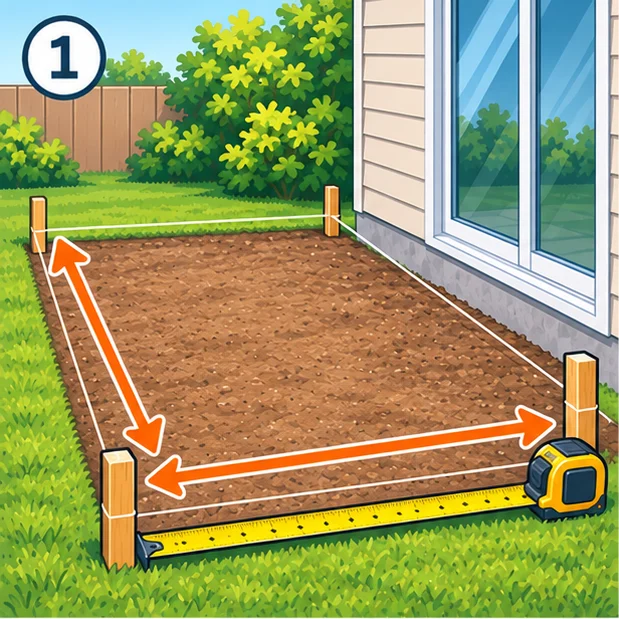
Step by step: planning a paver patio
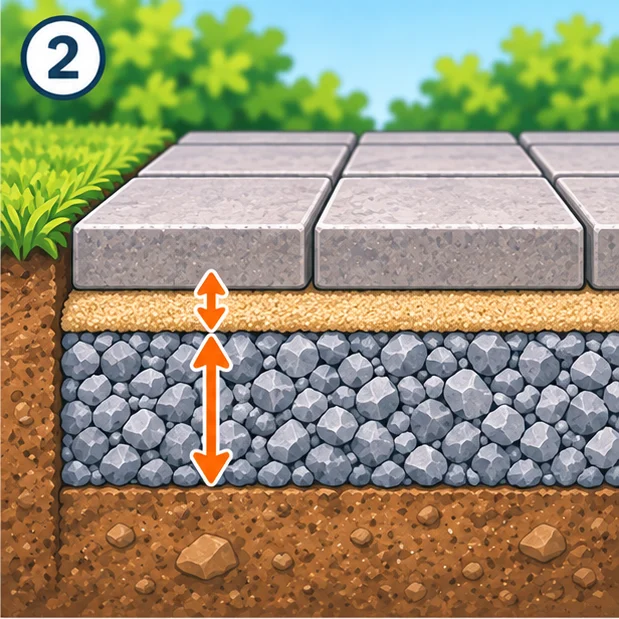
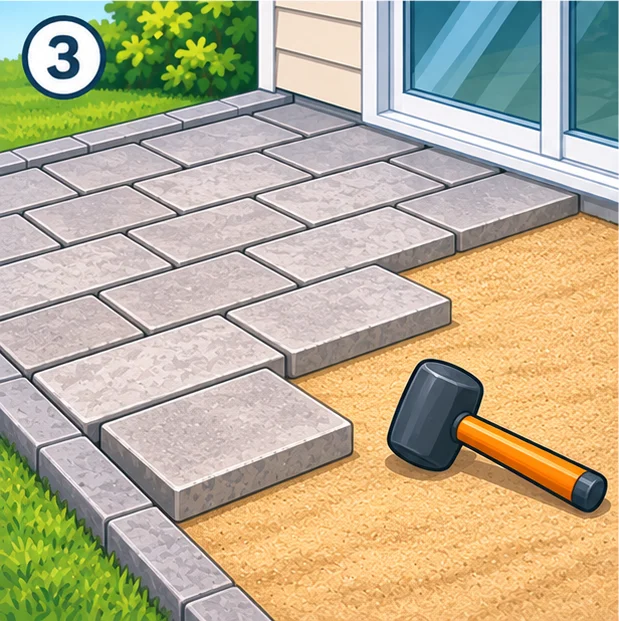
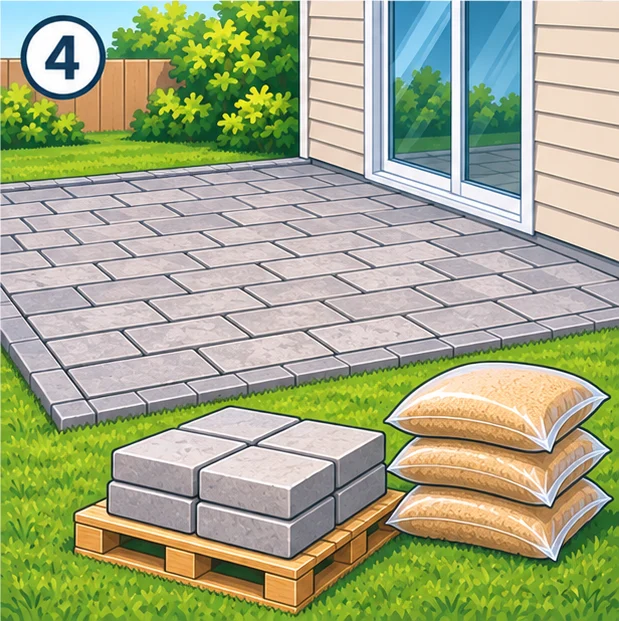
Tips before you order
- Patios and walkways usually need about a 4 in base; driveways and soft clay soils need more. Ask your supplier.
- Pavers are often sold by the pallet or by the square foot. Check how much a pallet covers.
- Plan a slight slope, about 1/4 in per foot, away from the house for drainage.
- Edge restraints and polymeric joint sand are not included in the counts.