Enter the length and height of the wall, any doors or windows in it, and the brick size you plan to use. The calculator counts the bricks for a single-wythe wall in running bond, adds 5% for breakage and cuts, and shows how much mortar it takes.
How the brick calculator works
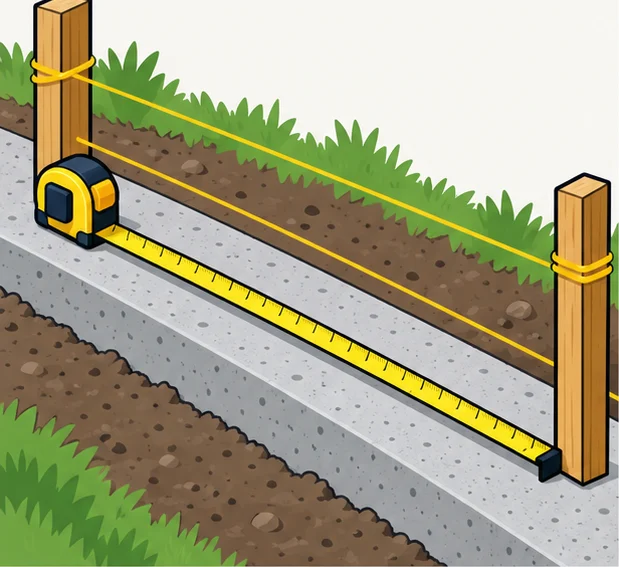
- Wall area = length × height, minus 21 sq ft for each door and 15 sq ft for each window.
- Bricks = wall area ÷ 100 × bricks per 100 sq ft for the brick size, plus the extra you choose, rounded up.
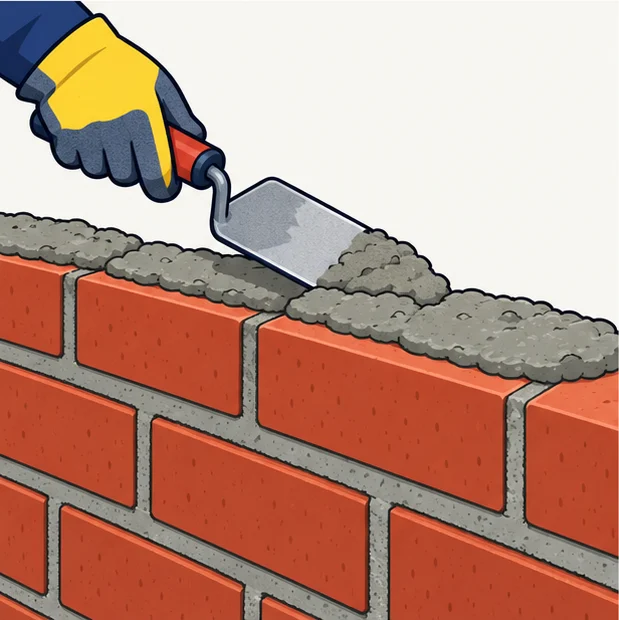
- Mortar = wall area ÷ 100 × cubic feet of mortar per 100 sq ft for the brick and joint, plus 20% waste.
The bricks and mortar per 100 sq ft come from the Brick Industry Association (BIA) estimating table, which already includes the mortar joint. BIA recommends adding at least 5% to the brick count and 15% to 25% to the mortar.
Bricks and mortar by brick size
| Brick | Size (L × H × W) | Bricks per sq ft | Mortar per 100 sq ft, ⅜ in joint | Mortar per 100 sq ft, ½ in joint |
|---|---|---|---|---|
| Modular | 7⅝ × 2¼ × 3⅝ in | 6.75 | 5.5 | 6.9 |
| Queen | about 8 × 2¾ × 3 in | 5.50 | 6.7 | 7.4 |
| King | about 9⅝ × 2¾ × 3 in | 4.55 | 6.5 | 7.3 |
| Standard | 8 × 2¼ × 3⅝ in | 6.55 | 9.5 | 11.0 |
| Engineer modular | 7⅝ × 2¹³⁄₁₆ × 3⅝ in | 5.63 | 4.8 | 6.1 |
| Closure modular | 7⅝ × 3⅝ × 3⅝ in | 4.50 | 4.1 | 5.2 |
| Norman | 11⅝ × 2¼ × 3⅝ in | 4.50 | 5.1 | 6.5 |
| Utility | 11⅝ × 3⅝ × 3⅝ in | 3.00 | 3.7 | 4.7 |
Worked example
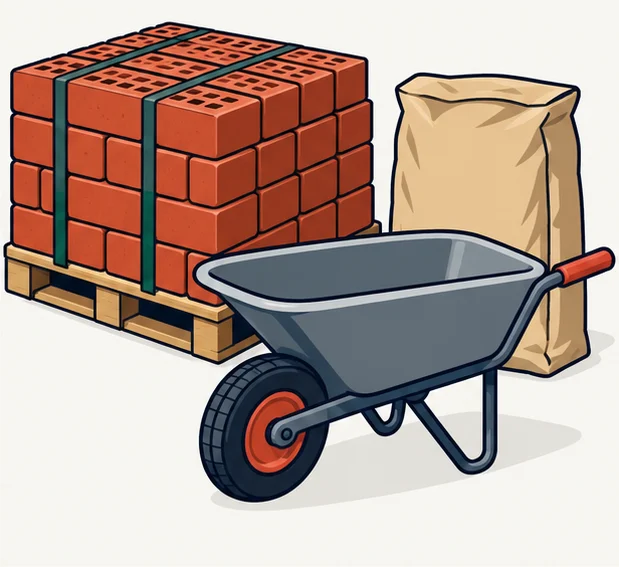
A garden wall is 25 ft long and 4 ft high, so 100 sq ft, built with modular brick and ⅜ in joints. 100 sq ft takes 675 bricks; with 5% extra that is 708.75, so 709 bricks. Mortar is 5.5 cu ft per 100 sq ft, and with 20% waste 6.6 cu ft. To lay 709 bricks with 80 lb bags of mortar mix, the mortar calculator gives 23 bags.
Step by step: estimating a brick wall
Tips before you order
- The count is for one layer (wythe) of brick. A double-wythe wall needs twice the brick, plus mortar for the joint between the layers.
- Headers in Flemish, English or common bond use more brick than running bond.
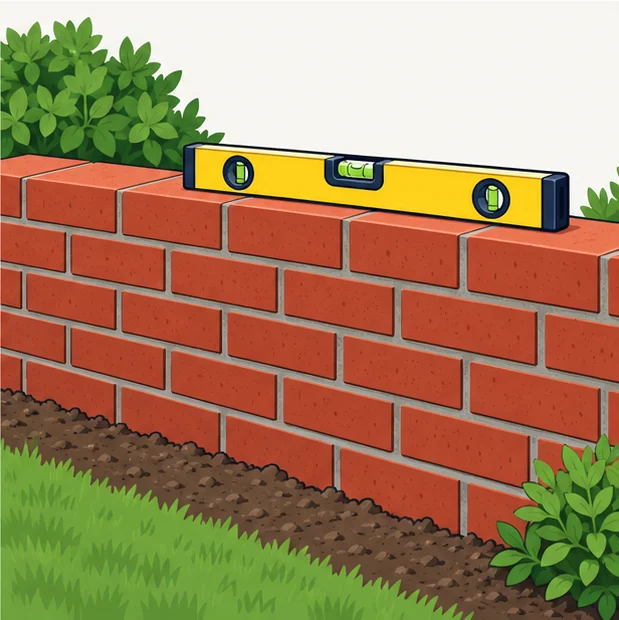
- Freestanding and retaining walls need a proper footing; tall or retaining walls need a design for the site. Check local code before you build.
- Order all the brick at once if you can; batches can differ slightly in color.