Enter the length and width of the area and how deep the gravel should be. The calculator gives you the volume in cubic yards and the weight in tons, which is how most suppliers sell gravel and crushed stone.
How the gravel calculator works
- Volume = length × width × depth, converted to cubic yards (27 cu ft each).
- Extra for compaction and an uneven base is added on top. The default is 10%.
- Weight = volume × material weight. The default is 2,800 lb per cubic yard (1.4 tons), a middle value for crushed stone and gravel.
- The shopping list rounds up to the next tenth of a ton.
Worked example
A 10 × 20 ft parking pad at 4 in deep is 200 × 4 ÷ 12 = 66.7 cu ft. With 10% extra that is 73.3 cu ft, or 2.72 cubic yards. At 2,800 lb per cubic yard it weighs 7,605 lb, which is 3.80 tons, so you would order about 3.9 tons.
Gravel per 100 square feet
Volume and weight at 2,800 lb per cubic yard, before extra.
| Depth | Cubic yards | Tons | With 10% extra (tons) |
|---|---|---|---|
| 2 in | 0.62 | 0.86 | 0.95 |
| 3 in | 0.93 | 1.30 | 1.43 |
| 4 in | 1.23 | 1.73 | 1.90 |
| 6 in | 1.85 | 2.59 | 2.85 |
How deep should gravel be?
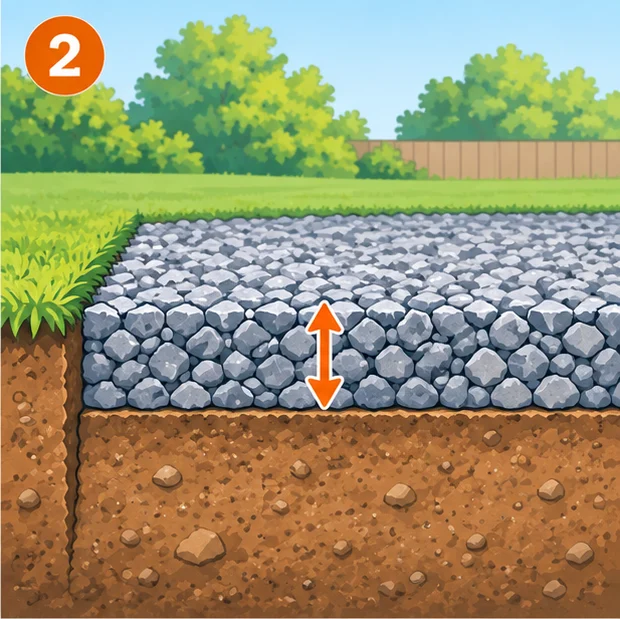
These are common depths. Driveways on soft soil or with heavy vehicles need a thicker, layered base, so ask a local supplier or contractor.
| Use | Typical depth |
|---|---|
| Garden path | 2 to 3 in |
| Patio or shed base | 4 in |
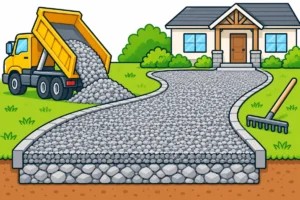
| Driveway | 4 to 6 in, often in layers of larger stone below and finer stone on top |
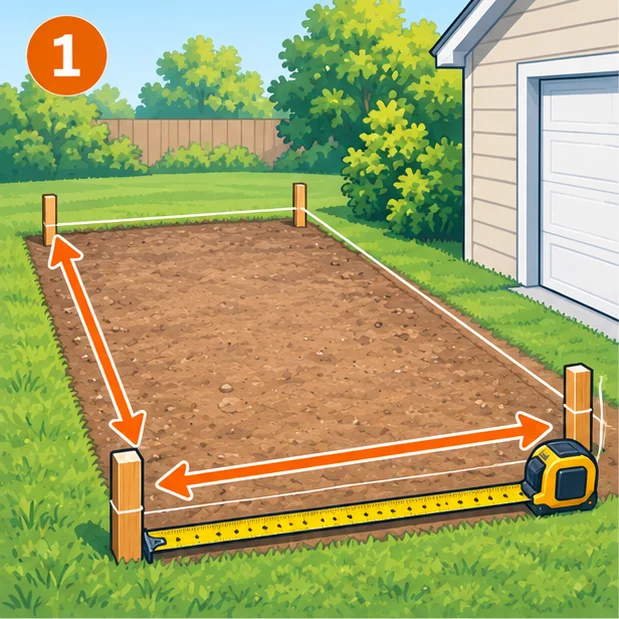
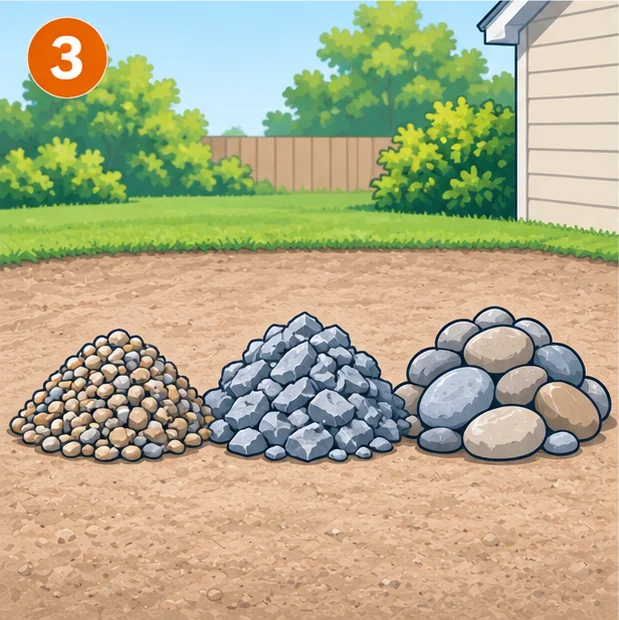
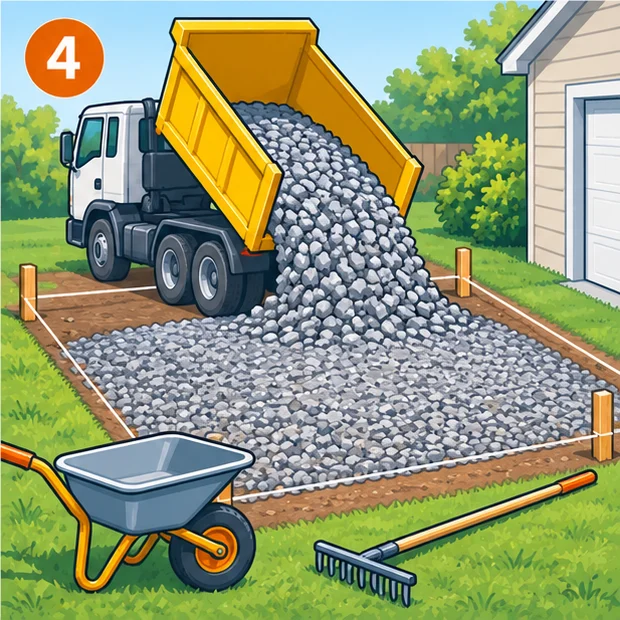
Step by step: ordering gravel
Tips before you order
- Weight varies with stone type and moisture, from about 2,400 to 3,000 lb per cubic yard. Use the supplier figure when you have it.
- Bulk delivery is usually much cheaper than bags for more than about one cubic yard.
- Landscape fabric under the gravel helps keep weeds down and stops stone sinking into soft soil.
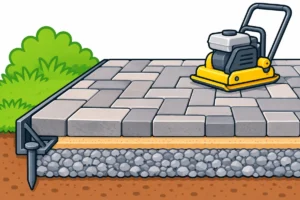
- Compact base layers in passes of a few inches rather than all at once.