Enter the size of the floor or wall, the size of your tile and the grout joint. The calculator works out how many tiles cover the area, adds extra for cuts and breakage and, if you enter how many tiles come in a box, rounds up to whole boxes.
How the tile calculator works
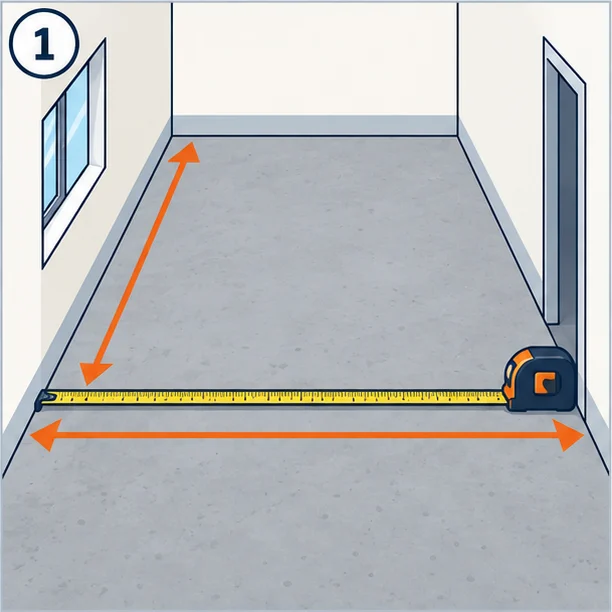
- Area = length × width of the floor or wall.
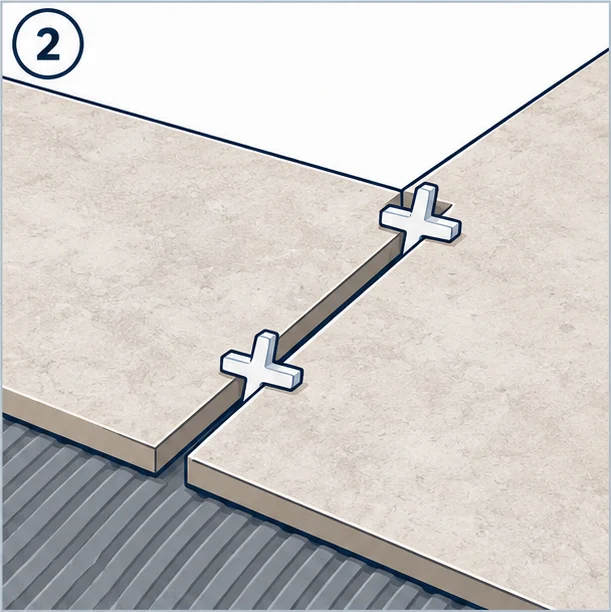
- Space per tile = (tile length + joint) × (tile width + joint). Each tile covers its own face plus half of the grout line around it.
- Tiles = area ÷ space per tile, then × (1 + extra %) and rounded up to a whole tile.
- Boxes = tiles ÷ tiles per box, rounded up.
Openings such as a shower tray or a kitchen island are not subtracted automatically. For an L-shaped room, run the calculator for each rectangle and add the results.
Worked example
A 10 × 12 ft bathroom floor is 120 sq ft. With 12 × 12 in tiles and a 1/8 in joint, each tile takes up (12.125 ÷ 12)² = 1.021 sq ft, so 117.5 tiles cover the floor. Adding 10% for cuts gives 129.3, which rounds up to 130 tiles. If a box holds 10 tiles, that is 13 boxes.
Tiles per 100 square feet
Use this table for a quick check. It assumes a 1/8 in joint (1/16 in for subway tile) and shows the count before and after 10% extra.
| Tile size (in) | Tiles per 100 sq ft | With 10% extra |
|---|---|---|
| 3 × 6 (subway) | 776 | 854 |
| 6 × 6 | 384 | 423 |
| 6 × 24 (plank) | 98 | 108 |
| 12 × 12 | 98 | 108 |
| 12 × 24 | 49 | 55 |
| 18 × 18 | 44 | 49 |
| 24 × 24 | 25 | 28 |
How much extra tile to buy
Extra covers cut pieces at the edges, breakage and a few spares for future repairs. These are common starting points; your installer may suggest more for complex rooms.
| Layout | Typical extra |
|---|---|
| Straight grid, simple room | 10% |
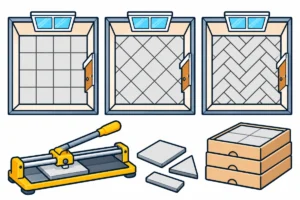
| Diagonal or herringbone | 15% |
| Many corners, niches or large-format tile | add 5% more |
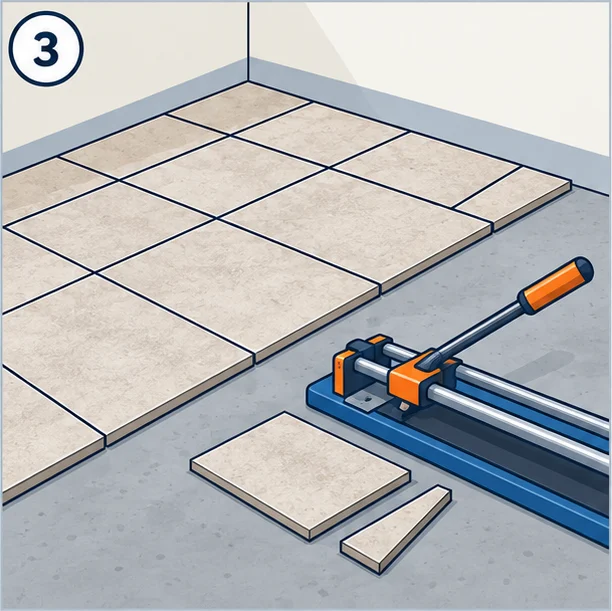
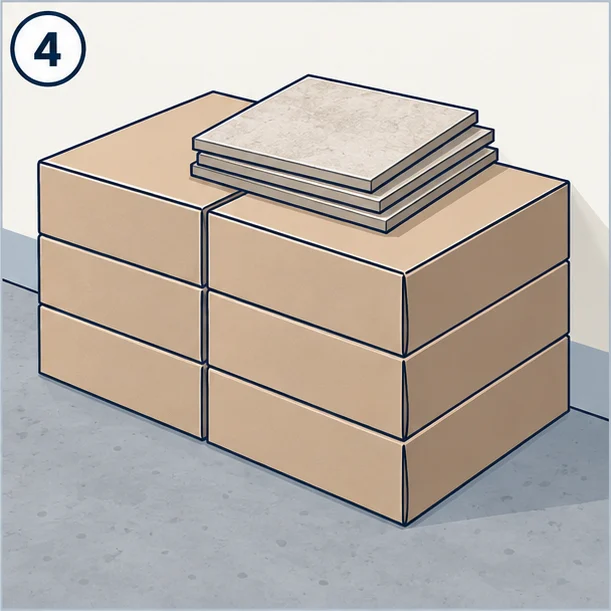
Step by step: measuring and buying tile
Tips before you order
- Check the lot or batch number on every box. Tiles from different lots can differ slightly in shade and size.
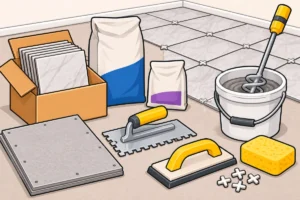
- Grout, thinset mortar, spacers and backer board are not included in the count. Use the grout calculator and the thinset calculator for those.
- Lay out a dry row before you start to see where the cut pieces will fall.
- Keep a few unopened spares. Matching a discontinued tile years later is hard.