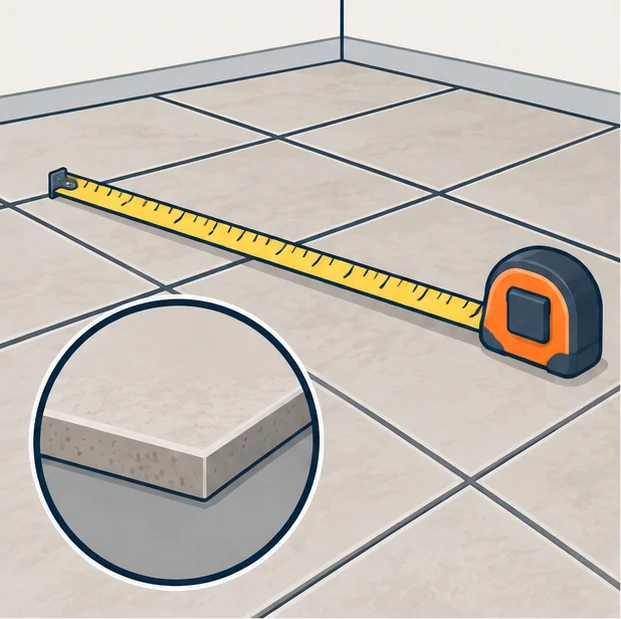
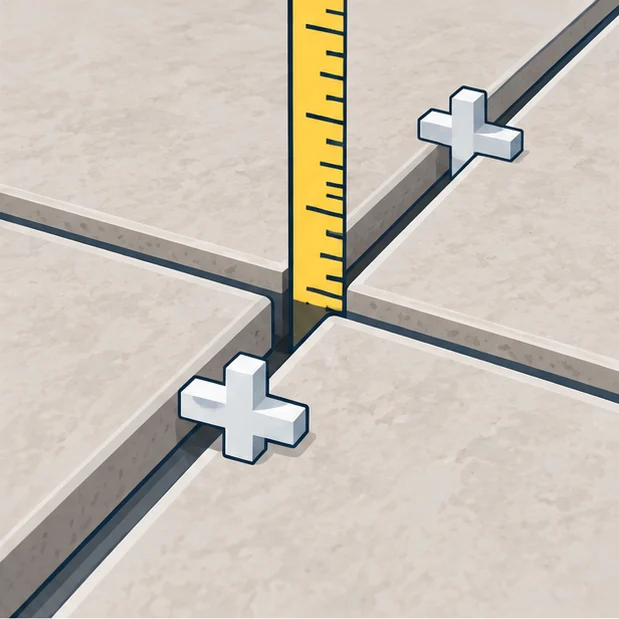
Enter the size of the tiled area, the tile size and thickness, and the width of the grout joints. The calculator works out the volume of the joints, turns it into pounds or kilograms of grout and tells you how many 10 lb or 25 lb bags to buy.
How the grout calculator works
- Joint length per square foot: each tile owns one tile length plus one tile width of joint, so the joint per unit of floor is (tile length + tile width) ÷ (tile length × tile width).
- Joint volume = joint length × joint width × joint depth × area. The joint depth is the tile thickness, because joints are filled flush with the tile surface.
- Grout weight = joint volume × the weight of mixed grout, then + the extra percentage for mixing and cleanup.
- Bags = grout weight ÷ bag weight, rounded up.
The grout weight we use, about 0.06 lb per cubic inch (1,670 kg/m³), is worked out from a manufacturer coverage table for a cement grout. It matches that table within about 1% for common tile sizes. Other products weigh more or less, so compare the result with the coverage chart on your bag.
Worked example
A 10 × 12 ft bathroom floor (120 sq ft) with 12 × 24 in porcelain tile, 3/8 in thick, and a 3/16 in joint:
- Joint volume per sq ft = (12 + 24) ÷ (12 × 24) × 3/16 × 3/8 × 144 = 1.27 cubic inches.
- For 120 sq ft: 1.27 × 120 = 151.9 cubic inches.
- Grout: 151.9 × 0.0603 = 9.2 lb, or 10.1 lb with 10% extra.
- That is one 25 lb bag, or two 10 lb bags, since 10.1 lb is just over one small bag.
Square feet per 25 lb bag
How far one 25 lb bag goes for common tile sizes and joint widths, from the same formula. Narrow joints and large tiles use far less grout; small tiles with wide joints use the most.
| Tile size and thickness | 1/16 in joint | 1/8 in joint | 3/16 in joint | 1/4 in joint |
|---|---|---|---|---|
| 3 × 6 in subway, 5/16 in | 295 | 147 | 98 | 74 |
| 6 × 6 in, 3/8 in | 368 | 184 | 123 | 92 |
| 12 × 12 in, 3/8 in | 737 | 368 | 246 | 184 |
| 6 × 24 in plank, 3/8 in | 589 | 295 | 196 | 147 |
| 12 × 24 in, 3/8 in | 982 | 491 | 327 | 246 |
| 24 × 24 in, 3/8 in | 1,473 | 737 | 491 | 368 |
Sanded, unsanded and other grouts
- Unsanded or fine-aggregate grout is used for narrow joints, typically under 1/8 in, and for tile that scratches easily.
- Sanded grout is used for wider joints because the sand keeps it from shrinking and cracking.
- Epoxy and urethane grouts are sold by volume or in kits and have their own coverage charts; use those instead of a weight estimate.
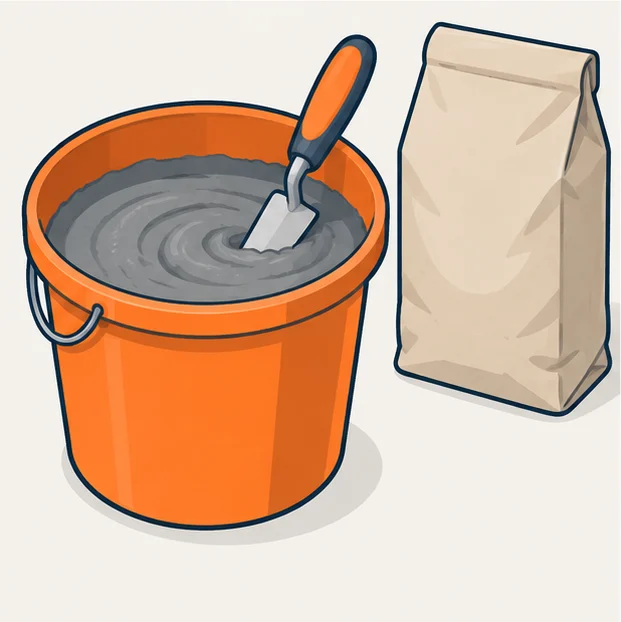
The joint widths each product is made for are printed on the bag. Check them before you buy.
Step by step: estimating and buying grout
Tips before you buy
- Buy all the grout from one batch so the color matches, and keep the bag label for touch-ups later.
- Wall tile with thin joints needs very little grout; a small bag often covers a whole backsplash.
- Tile count, thinset mortar and backer board are separate. Use the tile calculator for the tiles, the thinset calculator for mortar, and see what a tile job needs and costs.
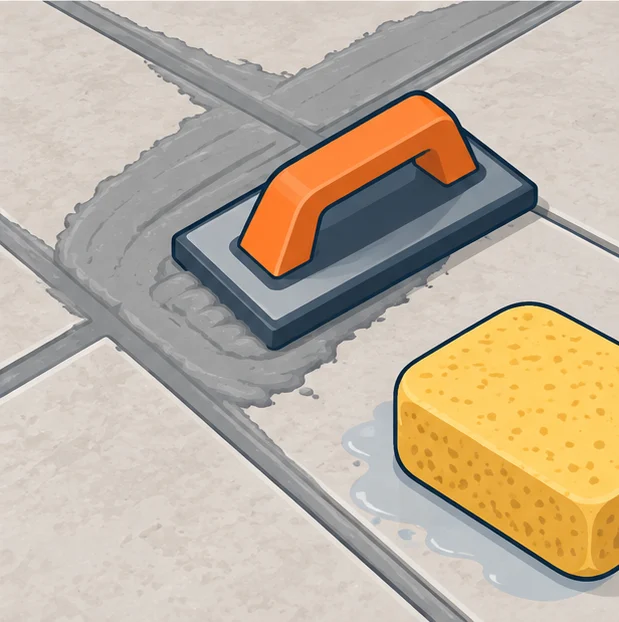
- Follow the cure time on the bag before sealing grout or getting it wet.