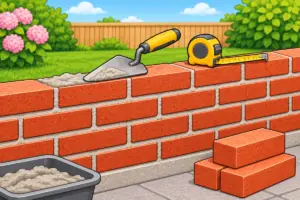
Enter how many bricks or concrete blocks you will lay and the bag size you plan to buy. The calculator divides by the number of units one bag lays, adds 15% for mortar dropped and left in the pan, and rounds up to whole bags. Not sure how many bricks you need? Start with the brick calculator.
How the mortar calculator works
- Bags = number of units ÷ units laid per bag × (1 + extra %), rounded up.
- Units per bag come from the QUIKRETE Mortar Mix (Type N) data sheet. Other brands publish their own figures, often a little different.
- The default 15% extra is the low end of the 15% to 25% the Brick Industry Association suggests for mortar waste.
Bricks and blocks per bag of mortar mix
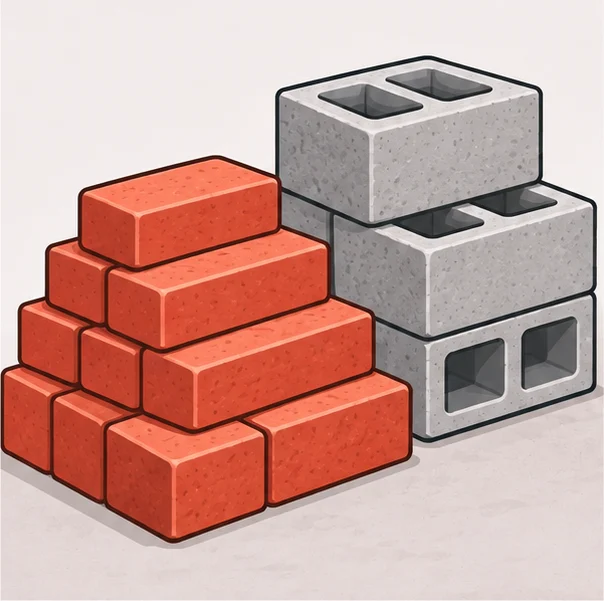
| Bag size | Standard bricks per bag | 8 × 8 × 16 in blocks per bag |
|---|---|---|
| 80 lb | 37 | 12 |
| 60 lb | 28 | 9 |
| 40 lb | 19 | 6 |
Worked example
You are laying 500 bricks with 80 lb bags. 500 ÷ 37 = 13.5 bags, and with 15% extra 15.5, so 16 bags. For a block wall of 120 blocks: 120 ÷ 12 = 10 bags, and with 15% extra 12 bags.
Which type of mortar?
Pre-mixed mortar is sold by type under the ASTM C270 standard. Type N is the usual choice for above-grade walls, garden walls and brick veneer. Type S is stronger and is used below grade and for retaining walls. For a repair, match the type and color of the existing mortar where you can.
Step by step: estimating mortar

Tips before you buy
- Thicker joints and rough or cored bricks use more mortar than the bag figures assume.
- Keep bags dry and off the ground; damp mortar mix lumps and loses strength.
- Stone, glass block and large units lay at different rates; follow the bag or the product data sheet.