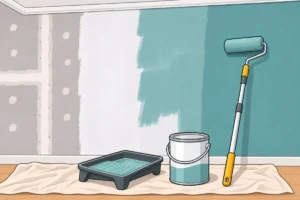
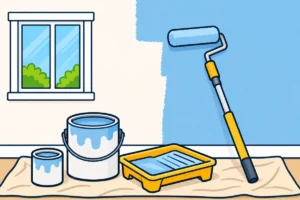
Enter the size of the room, the wall height and the number of doors and windows, then pick the surface. New drywall and patched walls soak up more primer than smooth painted walls, so the calculator uses a lower coverage for them and rounds the result to gallons and quarts.
How the primer calculator works
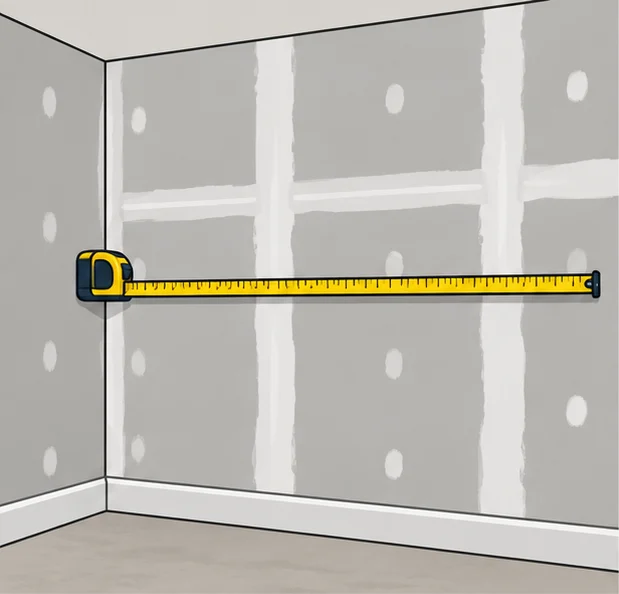
- Area = wall perimeter × height, minus 21 sq ft per door and 15 sq ft per window, plus the ceiling if you include it.
- Primer = area × coats ÷ coverage, plus the extra percentage.
- Coverage is 300 sq ft per gallon for porous surfaces (new drywall, bare wood, patched walls) and 400 sq ft per gallon for smooth, previously painted walls.
These are the low ends of manufacturer ranges. KILZ 2 All-Purpose lists 300 to 400 sq ft per gallon depending on texture and porosity, and Zinsser Bulls Eye 1-2-3 lists about 400 to 450 sq ft per gallon, or 350 on porous surfaces. Using the low end means you are less likely to run short.
Primer coverage by product
| Primer | Coverage per gallon |
|---|---|
| KILZ 2 All-Purpose | 300 to 400 sq ft |
| KILZ PVA Drywall Primer | 250 to 400 sq ft |
| Zinsser Bulls Eye 1-2-3 | 400 to 450 sq ft (350 on porous surfaces) |
Worked example
A 12 × 12 ft bedroom with 8 ft walls has 384 sq ft of wall. Take off one door (21 sq ft) and one window (15 sq ft) and there is 348 sq ft to prime. On new drywall, one coat at 300 sq ft per gallon plus 10% extra is 348 ÷ 300 × 1.1 = 1.28 gallons: one gallon and two quarts, or simply two gallons. On walls that were painted before, at 400 sq ft per gallon, it is 0.96 gallons, so one gallon.
Primer for common room sizes
| Room (8 ft walls, walls only) | Area | New drywall (300 sq ft/gal) | Painted walls (400 sq ft/gal) |
|---|---|---|---|
| 10 × 10 ft | 284 sq ft | 1.04 gal | 0.78 gal |
| 12 × 12 ft | 348 sq ft | 1.28 gal | 0.96 gal |
| 12 × 16 ft | 397 sq ft | 1.46 gal | 1.09 gal |
| 14 × 20 ft | 457 sq ft | 1.68 gal | 1.26 gal |
When you need primer
- New drywall and fresh joint compound: prime first so the paint dries to an even sheen over the taped seams.
- Bare wood, patched walls and big color changes, especially light over dark.
- Water, smoke or marker stains need a stain-blocking primer, sometimes two coats.
- Clean walls in good condition that are painted a similar color often do not need a separate primer.
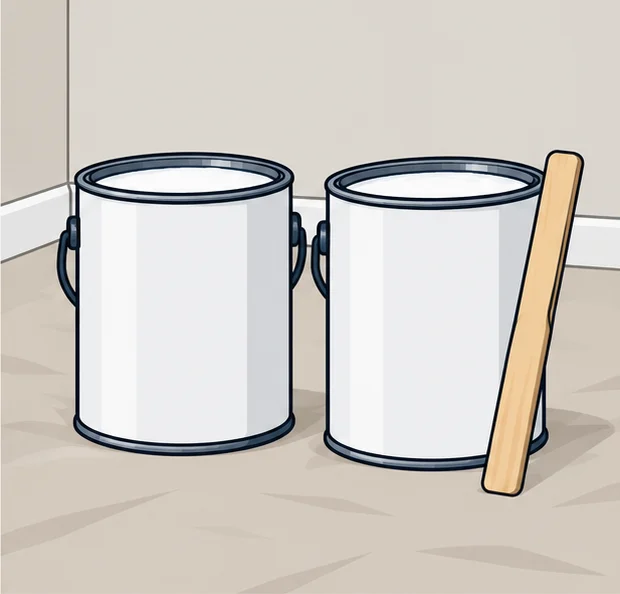
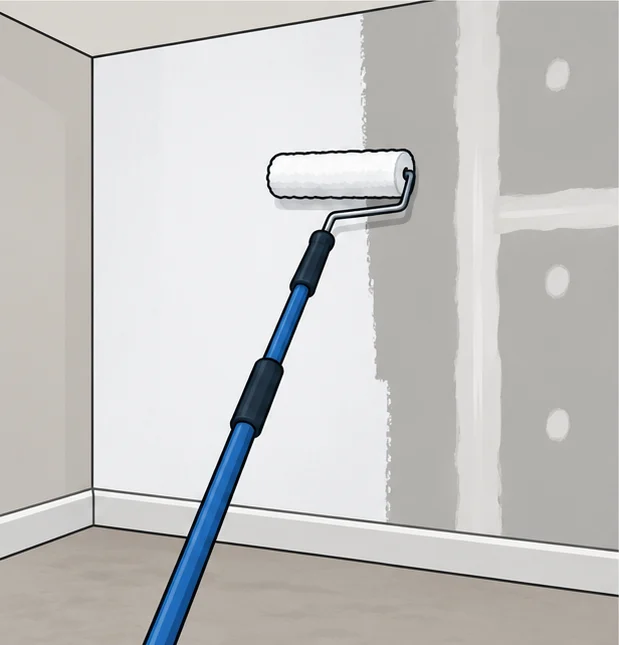
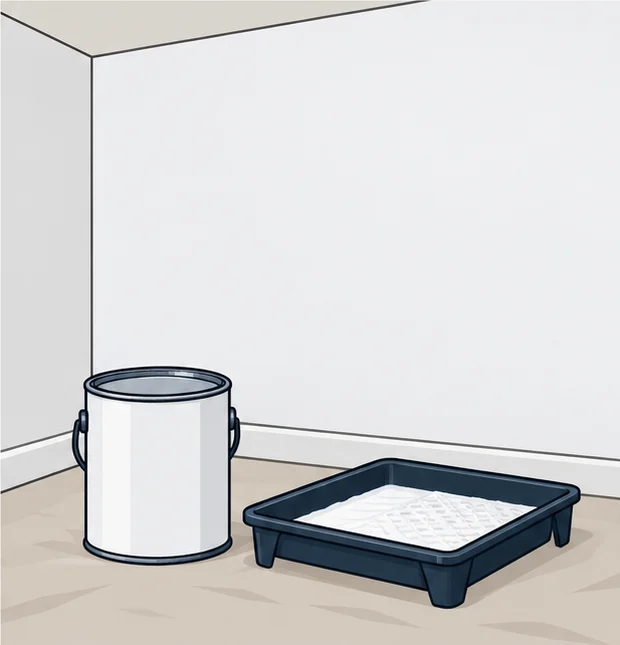
Step by step: estimating and applying primer
Tips before you buy
- Five gallons of primer usually cost less than five single gallons, so check the bucket price for big jobs.
- Tinting the primer toward the finish color can save a coat of paint over a strong color change.
- The paint calculator estimates the finish coats for the same room, and the ceiling paint calculator covers the ceiling on its own.
- See how many coats of paint you need for when a second coat is worth it.