Enter the length and height of the fence, choose whether you will stain one side or both, and pick the board surface. The calculator works out the area, divides by the coverage per gallon and adds 15% for posts, rails and brush loss. For the fence materials themselves, use the fence calculator.
How the fence stain calculator works
- Area = fence length × height × sides (1 or 2).
- Gallons = area × coats ÷ coverage per gallon, plus the extra you choose.
- Coverage is 150 sq ft per gallon for rough-sawn or weathered boards and 300 for smooth, new boards, from the ZAR Deck & Siding stain data sheet. Most fence boards are rough-sawn, so that is the default.
The area is the flat face of a solid fence. Posts and rails on the side you stain add surface, and so do the edges of boards on a board-on-board fence; the 15% extra covers a typical amount of that. Spaced pickets need less stain than a solid face.
Coverage by fence size
| Fence | Area, both sides | Rough boards (150 sq ft/gal) | Smooth boards (300 sq ft/gal) |
|---|---|---|---|
| 50 ft × 6 ft | 600 sq ft | 4.6 gal | 2.3 gal |
| 100 ft × 6 ft | 1,200 sq ft | 9.2 gal | 4.6 gal |
| 150 ft × 6 ft | 1,800 sq ft | 13.8 gal | 6.9 gal |
| 100 ft × 4 ft | 800 sq ft | 6.1 gal | 3.1 gal |
Worked example
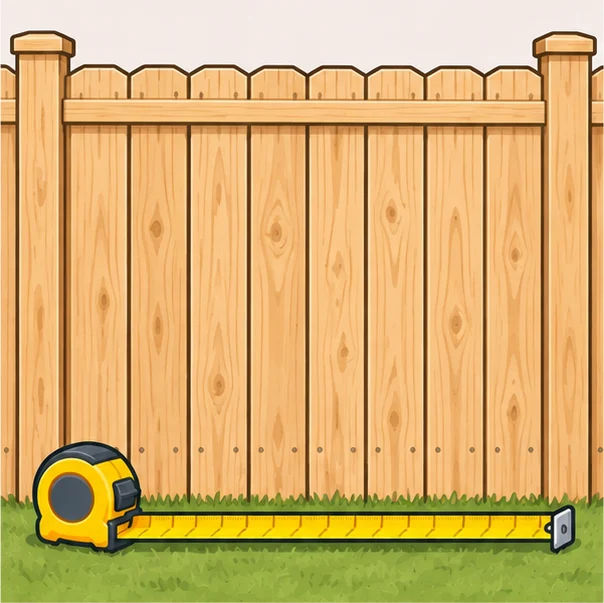
A 100 ft privacy fence is 6 ft high and will be stained on both sides. The area is 100 × 6 × 2 = 1,200 sq ft. Rough boards take about 150 sq ft per gallon, so one coat needs 8 gallons, and with 15% extra 9.2 gallons.
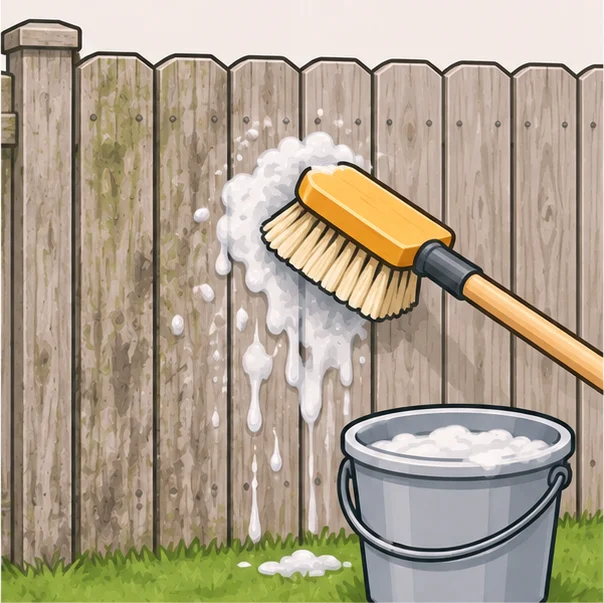
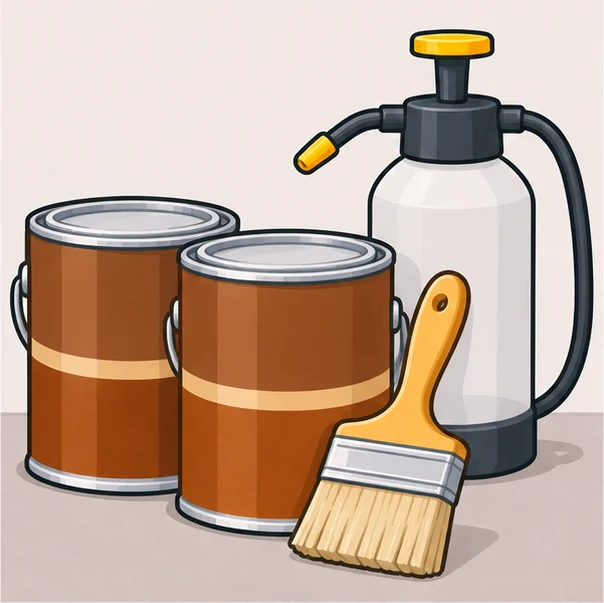
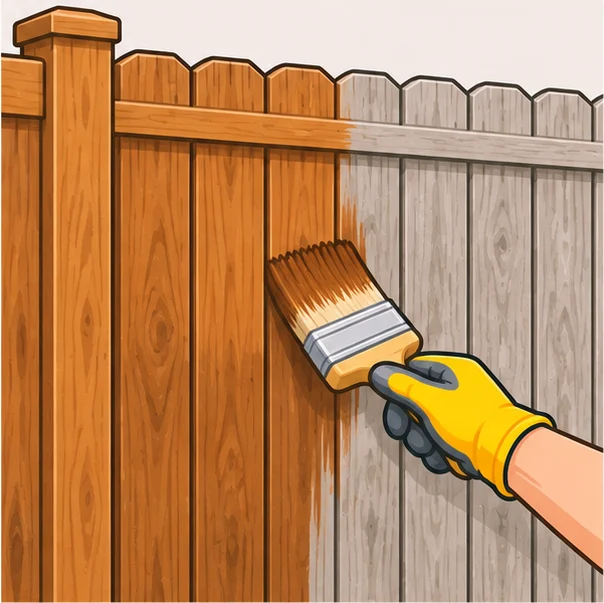
Step by step: estimating and staining a fence
Tips before you buy
- Coverage varies a lot by product and wood; check the label of the stain you buy.
- Sprayers put more stain on the fence and in the air than brushes or rollers; expect to use more.
- Do not stain in direct sun or when rain is due; follow the label for drying time.
- For a deck, use the deck stain calculator.