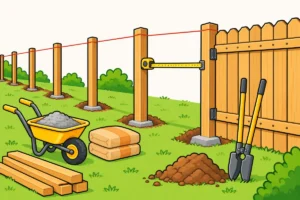
A widely used rule from QUIKRETE is to dig the hole one third of the post’s total length deep, plus 6 inches for a gravel base, and three times as wide as the post. For an 8 ft post that is a 38 inch hole about 10½ inches across, leaving about 5⅓ ft above ground. Where the post carries a structure such as a deck, the hole must go at least 6 inches below the local frost line, and local codes can require more.
The fence post concrete calculator turns hole size, depth and the number of posts into bags of concrete.
Why post hole depth matters
A fence post is a lever. Wind pushing on a solid privacy fence tries to rotate the post around a point just below the ground. The deeper the post is set, the more soil and concrete resist that rotation. Too shallow, and posts lean after a few storms; on frost-prone ground, a shallow footing can also be lifted by frost heave.
Depth and width by post size
| Post | Hole width (3× post) | Buried depth (⅓ length) | Hole depth with 6 in gravel | Height above ground |
|---|---|---|---|---|
| 4×4, 8 ft | 10½ in | 32 in | 38 in | About 5 ft 4 in |
| 4×4, 10 ft | 10½ in | 40 in | 46 in | About 6 ft 8 in |
| 6×6, 10 ft | 16½ in | 40 in | 46 in | About 6 ft 8 in |
| 6×6, 12 ft | 16½ in | 48 in | 54 in | 8 ft |
If you need a particular height above ground, work backwards: a 6 ft fence on the ⅓ rule needs a post about 9 ft long, so buy 10 ft posts and trim. Taller fences and windy sites argue for the longer post.
Frost line requirements explained
The frost line is the depth to which the ground freezes in winter, and it ranges from a few inches in the far South to several feet in the northern states. Water in the soil expands as it freezes and can lift a footing that sits above that depth.
- For posts that support a structure (decks, porches, pergolas tied to the house), QUIKRETE says the hole must extend at least 6 inches below the frost line, and building codes generally require footings below the local frost depth.
- Your local building department publishes the frost depth used for permits in your area.
- Many simple garden fences are not regulated, but a post set well above the frost line in heavy, wet soil is more likely to heave.
How hole diameter and depth affect concrete quantity
Concrete fills the hole around the post, from the gravel up to about 3 inches below the surface (so you can slope the top and backfill soil). Using standard 80 lb bags at 0.60 cu ft each:
| Post | Concrete depth | Concrete per post | 80 lb bags per post | 50 lb bags per post |
|---|---|---|---|---|
| 4×4, 8 ft | 29 in | 1.25 cu ft | 2.1 | 3.3 |
| 4×4, 10 ft | 37 in | 1.59 cu ft | 2.7 | 4.2 |
| 6×6, 10 ft | 37 in | 3.93 cu ft | 6.6 | 10.5 |
| 6×6, 12 ft | 45 in | 4.78 cu ft | 8.0 | 12.7 |
The jump from 4×4 to 6×6 is bigger than it looks: the wider hole nearly triples the concrete per post. When you order, total the concrete for all posts and then round up, rather than rounding every post. Our concrete bag yield chart lists yields for other bag sizes.
Soil, wind and post height
- Sandy or loose soil gives less grip; go deeper or wider.
- Heavy clay holds water; the gravel base helps drainage under the post.
- Tall solid fences catch more wind than open picket or rail fences of the same height.
- Gate and corner posts carry more load; many builders set them deeper or use a larger post.
When local codes require a different approach
Fences over a certain height, pool barriers, fences near property lines or public walkways, and any post that supports a structure may be regulated. Check height limits, setback rules and footing requirements with your city or HOA before you dig, and call 811 so buried utilities are marked. For spacing, see how far apart fence posts should be.
Sources
- QUIKRETE: Setting Posts (project guide) (hole diameter, hole depth, gravel base and frost line)
- QUIKRETE Concrete Mix (No. 1101) data sheet (bag yields and water per bag)